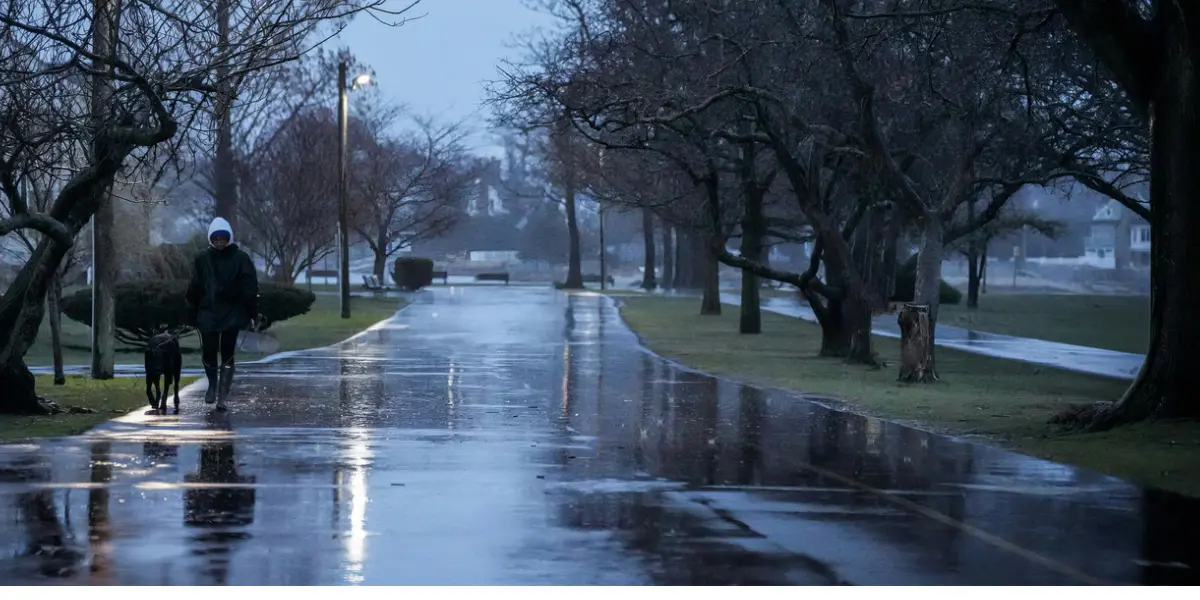
As the clocks change and darker evenings draw in, our usual dog walking routine often needs adjusting.
In summer, we had plenty of time to head out after work in the daylight. But now Autumn has arrived, our dog walks will inevitably end up in the dark!
For some dogs, the world can feel very different once the sun goes down. That’s why we’re keen to educate owners on how to keep safe when out walking around Bridlington.
It’s about finding a balance between keeping yourself and your dog safe whilst also making sure they get the exercise and stimulation they need.
How to make dog walking in the dark safer
The main challenge of walking after dark is reduced visibility. You can’t always see what your dog is investigating, and they may not be able to see any potential hazards either.
Keep your dog close
Using a fixed-length lead gives you control when visibility is poor. It keeps them safe while still giving them the freedom to sniff and explore.
Remember, even when a dog has excellent recall, they can easily become distracted by a scent, another animal or something moving at night.
Before leaving home, check that your dog’s harness is fitted correctly and that the lead is in good condition.
When you’re walking near roads, use a pedestrian crossing where possible.
You can buy balls and toys that glow in the dark, but we’d recommend thinking carefully before using them.
If your dog becomes focused on chasing a glowing ball, they may run further away from you than they normally would. In poor visibility, this could put them at risk from roads, uneven ground, water or other hazards.
For night-time walks, keeping your dog close and visible is generally more important than playing fetch in the dark.
Think about what you can’t see
Hazards that are usually easy to spot during daylight become less noticeable in the dark.
Your dog could find food, rubbish or something harmful on the ground. Keep an eye on what they’re sniffing or trying to pick up.
Fallen Autumn leaves can hide things like acorns, conkers and wild mushrooms.

Acorns and conkers can be poisonous to dogs if eaten, while some wild mushrooms can be highly toxic. Leaves can also conceal sharp sticks, broken branches, glass and other items.
Be wary when walking your dog in areas such as Danes Dyke Nature Reserve and around Sewerby Hall and Gardens. Woodland paths, parks and tree-lined routes can easily hide many hazards for your dog.
Be cautious around puddles and standing water, which you might come across on muddy walks this time of year. Shared outdoor water bowls, stagnant water in containers and water collected around parks or public spaces can also pose a risk to your dogs if they drink from them.
Water contaminated with infected animal urine can spread leptospirosis, a potentially life-threatening bacterial infection that can cause serious kidney and liver damage in dogs.
It’s also worth being aware of Alabama Rot, a rare but potentially life-threatening disease that has been associated with muddy woodland walks.
Make sure you keep your dog’s vaccinations up to date to help reduce the risk of this disease, although it doesn’t protect against every strain or other environmental hazards.
Stick to familiar, well-lit routes where possible, and keep a torch with you to check the path ahead and spot anything your dog might be tempted to eat.
If you suspect your dog has eaten something poisonous, contact your vet immediately rather than waiting for symptoms to develop.
“One of the common problems we see at the practice is dogs coming in with sore or injured paws, sometimes after picking up an injury during a walk.
“When you get home, check each paw carefully. Look between the toes and around the paw pads for anything stuck, such as stones, thorns or pieces of glass, as well as any cuts, redness or swelling. Check their nails, too, and keep an eye out for limping or signs of discomfort.
“Some dogs aren’t particularly fond of having their paws touched, which can make checking them more difficult. It’s a good idea to start getting your dog used to having their paws handled from a young age, using gentle touches and plenty of praise and treats to help them build positive associations. This way, regular paw checks can become a normal part of their routine, making it easier to spot any problems early.”
Be aware of other people and animals
Dogs are sensitive to sounds and smells, and in the dark, they may hear or smell something before you do.
An unexpected encounter with another dog, a cyclist or a jogger can startle them, potentially causing them to bark, lunge, bolt towards the path or try to chase. This can lead to injuries, lead-related accidents or confrontations with other dogs and people.
Night-time can also bring more wildlife activity. Foxes may be out foraging around parks, gardens and woodland edges, creating unfamiliar sights and smells that can excite or unsettle your dog.
Direct attacks on dogs are uncommon, but a fox may bite if cornered or threatened. It’s best to give wildlife plenty of space and keep your dog under control.
Stay aware of what’s happening around you and avoid becoming distracted by your phone or headphones, giving you more time to notice things before your curious dog does.
Slugs and snails are also more noticeable in Autumn as they favour cold and damp conditions. Dogs can become infected with lungworm by accidentally eating an infected slug or snail, or ingesting their slime from things like outdoor water bowls.
Lungworm in dogs can cause serious illness, including breathing difficulties, bleeding problems and, in severe cases, death.
Not all routine worming products protect against lungworm, so please speak to our team if you’re unsure if your dog is covered.
It’s also worth remembering that parasites aren’t just a summer problem, as fleas and ticks can still be active during milder conditions.
It’s important to keep up with your dog’s preventative parasite treatment all year round.

Don’t forget your dog’s identification
It’s worth checking your dog’s identification before the darker evenings arrive.
If you have your dog’s microchip paperwork, use it to identify which database they’re registered with.
You can then contact the database provider or log in online to check that your name, address, phone number and email address are all correct.
There’s a service called Check-a-Chip that can help you find the database that holds your pet’s details if you’re unsure.
If you don’t know your dog’s microchip number, we will be able to scan them and find it for you.
Dogs must also wear a collar with a tag securely attached. This should display your current contact details, including your name, address and phone number.
Remember, even a normally reliable dog can react unexpectedly to a sudden noise, another animal or a bright light. Keeping their identification up to date gives you a much better chance of being reunited if they escape. It’s also a legal requirement in England.
Don’t force them to continue
Some dogs become reluctant to go outside once the evenings get darker. They may hesitate when you get the lead out or try to turn back home while out on their walk.
Why are some dogs scared of the dark?
Dogs rely heavily on their senses, but in low light, everything can seem a little less familiar.
As things start to quieten down as the evenings draw near, sounds can seem more noticeable and unfamiliar smells can also leave them feeling uncertain.
A negative experience in the dark, a naturally cautious temperament or changes associated with ageing can also contribute to their reluctance to go outside in the dark.
If your dog is clearly uncomfortable, don’t force them to continue. If they want to turn around and go home, listen to them. A short, positive walk is preferable to forcing them through an experience that leaves them frightened.
You can gradually build their confidence and reward calm behaviour with praise or treats.

Don’t forget about pet weight management
“It’s understandable to feel less enthusiastic about heading out when it’s cold, wet and dark. However, at Aldgate Vets, we know how important it is for dogs to maintain a regular exercise routine throughout the winter months.
“We can see how changes to daily routines during the colder, darker months may contribute to weight gain in pets. When walks become shorter or less frequent, dogs may burn fewer calories, which can make it harder to maintain a healthy weight, particularly if their food intake stays the same.
“If you’re concerned that your dog is gaining weight or isn’t getting enough exercise during winter, we can help. We can offer advice on suitable exercise routines, nutrition and healthy weight management to help keep your dog happy and healthy all year round.”
Get kitted out before walking in the dark
Making yourself and your dog easier to see can make nighttime walks much safer. You should consider items such as:
- LED collars or lights
- Reflective harnesses
- High-visibility or reflective leads
- Reflective coats or vests
- A torch/head torch
Even though dogs have a natural barrier with their fur, they can still feel the cold.
Smaller dogs, short-haired breeds such as Whippets, puppies, older dogs and those with health conditions may need extra protection during colder walks.
If you’ve noticed your dog is often shivering when out and about, consider getting them a waterproof dog coat to wear.
It mustn’t restrict how they move or go to the toilet, so check around the neck and chest.

Avoid certain areas
We’re natural creatures of habit, and usually will take a familiar route when taking our dogs for a walk throughout the year. But it’s worth considering whether this routine is still appropriate once it gets dark.
If you usually walk your dog along countryside footpaths around Bridlington, remember that rural routes can be particularly difficult to navigate after dark.
Keep your dog under close control around livestock. If you can’t clearly see the path ahead, it’s better to save that route for daylight.
Also, Bridlington’s beaches can be lovely places to walk during daylight hours, but we wouldn’t recommend taking your dog onto the beach at night.

Understand their triggers
Previous experiences can influence how a dog responds to nighttime walks.
Has your dog had a previous frightening experience this time of year? Maybe it’s the fireworks on Bonfire Night, or even just a sudden bang during an evening walk.
Dogs love routine, so if anything throws them out of sync, it can change their behaviour. A dog that starts just a little bit scared can actually grow into a deeper fear year after year.
They learn by association, so if they associate the darker evenings with a frightening experience like Bonfire Night, they are going to think it will happen all the time.
Try to work out what is actually worrying your dog. Is it the darkness itself, or is it the shadows, traffic, unfamiliar noises, other dogs or a particular location?
Understanding what’s triggering their fear is an important first step towards helping them feel more comfortable and confident on their walks.
Consider whether there could be any medical issues
If your dog’s behaviour has changed and the things they used to love have now turned into a battle to get them to do, there could be an underlying issue.
It’s important not to just assume they’re nervous or just being stubborn, and try to think about the bigger picture.
They could be suffering from a hearing issue, or their vision might be impaired. This may be the case as they get older, so it’s worth considering whether they need any additional veterinary support.
These sorts of changes can really affect how a dog experiences their surroundings.
If you’ve noticed a change in your dog’s behaviour, please book an appointment for one of our tailored pet behaviour clinics. We can investigate your dog’s behaviour in more detail to try to get to the bottom of whether there is anything else bothering them.
Enjoy safe walks with your dog
We want dog owners to enjoy their daily walks, even when the clocks change. Education is the best way to protect your pet and still have fun along the way.
At Aldgate Vets, we’re always happy to help if you’re concerned about your pet.