One of the tricky things about dental disease is that pets are remarkably good at carrying on as normal. A dog with a painful tooth may still chase a ball. A cat with sore gums may still run to the food bowl.
They don’t always show us the obvious signs we’d expect from a pet with toothache.
That’s why what you can see in your pet’s mouth can be one of your best clues that something isn’t right.
A yellow or brown build-up on the teeth. Red or bleeding gums. A chipped tooth. Persistent bad breath. A swelling beneath the eye.
These aren’t simply cosmetic problems. They can be signs of dental disease, infection or pain.
So, what should you look for?
7 Visible Signs Your Pet’s Teeth Need Attention
1. Yellow or Brown Build-Up on the Teeth
A yellow, tan or brown deposit along the teeth, particularly near the gumline, is one of the easiest signs to spot.
This can begin as plaque which is a sticky film of bacteria that continually forms on the teeth. If it isn’t removed, it can harden into tartar.
Tartar isn’t just a cosmetic issue. Its rough surface provides more opportunity for plaque to accumulate and can contribute to inflammation around the gums.
What should you do?
If you’ve noticed a small amount of build-up, arrange a dental check and ask our team about an appropriate home-care routine. Once the tartar has formed, brushing at home won’t simply remove it.
2. Red, Swollen or Bleeding Gums
Healthy gums should generally be pink and firm.
Redness, swelling or bleeding, particularly around the edges of the teeth, can indicate gingivitis, a form of inflammation of the gums.
You might notice blood on a favourite toy, pink-tinged saliva or bleeding when your pet chews.
Early gum inflammation can often be addressed before it progresses to more advanced periodontal disease. As periodontal disease develops, the tissues and bone supporting the teeth can become damaged.
Don’t wait for your pet to stop eating before taking gum inflammation seriously.
If the gums are regularly bleeding, noticeably swollen or very red, arrange a veterinary dental assessment.
3. Chipped, Broken or Discoloured Teeth
Dogs, particularly enthusiastic chewers, can damage their teeth. Cats can also suffer fractured or damaged teeth, although the signs may be less obvious.
Look for teeth that have become:
- Chipped or cracked
- Broken
- Grey or brown
- Pink or unusually discoloured
A significant fracture can expose the sensitive tissues inside the tooth. This can be painful and may allow bacteria to enter, potentially leading to infection.
If you can see that a tooth has fractured, a veterinary examination can determine the extent of the damage and what treatment, if any, is needed.
4. Loose or Missing Adult Teeth
Puppies and kittens naturally lose their baby teeth as they grow, but adult teeth are different.
If you notice a tooth moving, a new gap or a tooth that has disappeared, it can indicate damage to the structures supporting it, often associated with periodontal disease or another dental problem.
Don’t assume that a missing tooth means the problem has gone away. The disease affecting the surrounding tissues may still need attention.
If an adult tooth is loose or missing, arrange a veterinary assessment.
5. Bad Breath That Goes Beyond “Pet Breath”
Persistent foul breath isn’t something you simply have to accept because you own a dog or cat.
A consistently unpleasant smell can be an important clue that something is happening in the mouth.
Dental disease, bacteria and inflammation can all contribute to bad breath. Sometimes it’s the first thing an owner notices before they spot anything unusual on the teeth.
So if your pet’s breath has changed, don’t just reach for another breath freshener.
6. Facial Swelling, Bumps or Lumps
Facial swelling is a sign we don’t recommend ignoring.
A swelling beneath the eye, around the muzzle or along the jaw can sometimes be associated with a dental infection or abscess.
An abscess involving a tooth root can be extremely painful, even if your pet doesn’t make that obvious.
If you notice facial swelling, contact our practice immediately.
7. Changes in Eating or Behaviour
Not every dental problem is obvious when you look at the teeth.
You may notice that your pet:
- Chews on one side of their mouth
- Drops food
- Takes longer to eat
- Avoids harder food
- Becomes reluctant to play with chew toys
- Doesn’t want their face touched
- Becomes quieter or more irritable
- Stops eating
These signs don’t automatically mean dental disease, but they are reasons to arrange a veterinary examination.
What Should You Do If You Spot These Signs?
Not every dental change needs an urgent appointment, but some shouldn’t be ignored.
Something to Keep an Eye On
You might notice:
- Slight yellowing or a small amount of tartar
- A thin red line along the gums
- Occasional unpleasant breath
These can be early signs that plaque and tartar are beginning to build up. The earlier you act, the easier it can be to prevent dental disease from progressing.
When Is It Time to Book a Dental Check?
You might see:
- Thick or dark tartar
- Noticeably red, swollen or bleeding gums
- Persistent bad breath
- Loose teeth
- Several teeth that look affected
At this stage, home care alone may not be enough. We can assess your pet’s mouth and discuss whether professional dental treatment and dental X-rays are appropriate.
Contact Your Vet Immediately If You See
Some signs need more urgent attention, including:
- Facial swelling
- A significantly fractured tooth
- Pus or other discharge
- Severe mouth pain
- Difficulty eating
- Sudden inability to eat
- Significant bleeding
- Marked behavioural changes associated with pain
You don’t need to work out what’s wrong before you call us. If something about your pet’s mouth doesn’t look right, we’re here to help you decide what to do next.
The Problem You Can’t See
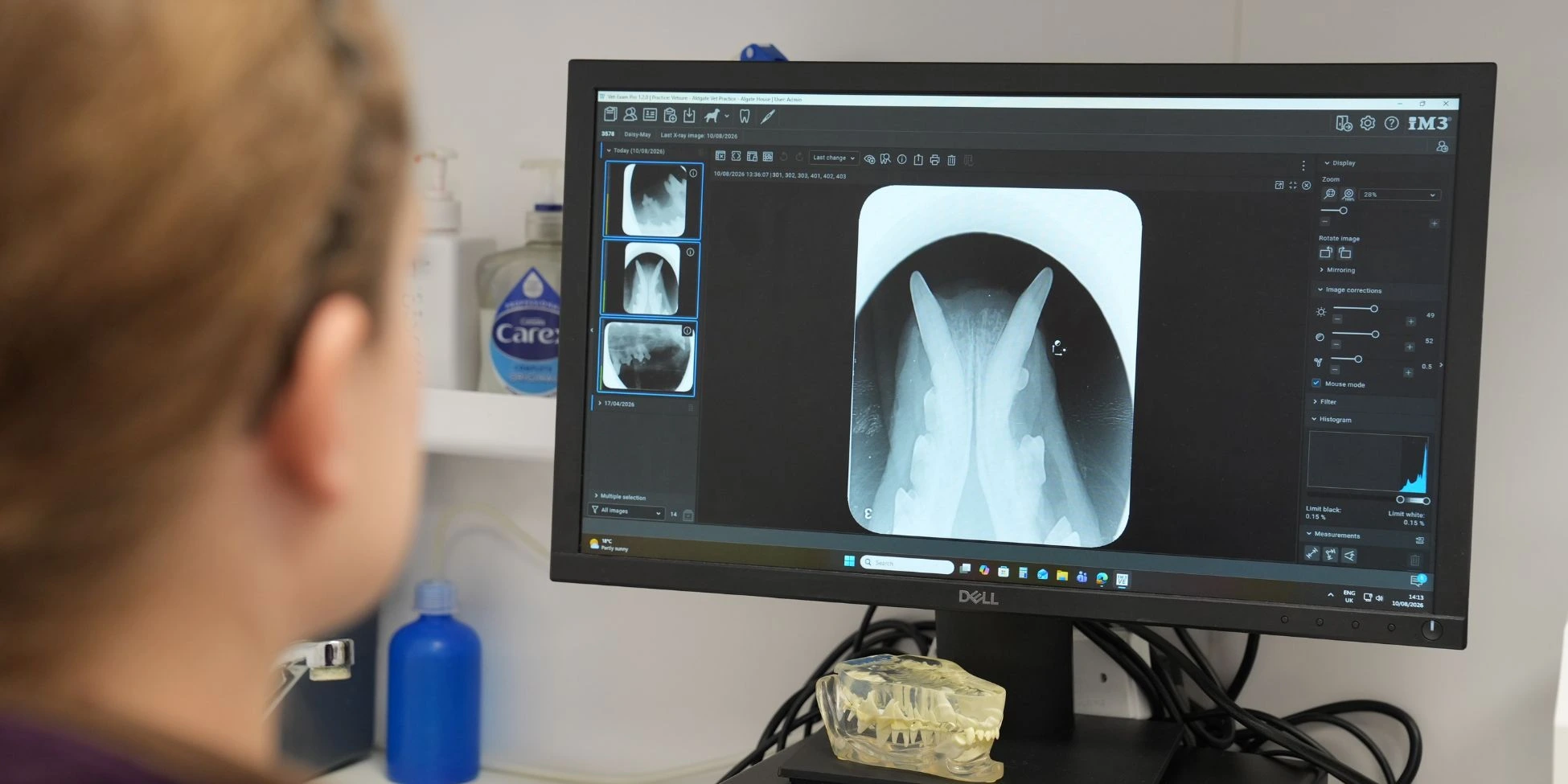
Dental disease can occur below the gumline, affecting the tooth root and the bone supporting the tooth. That means a tooth can sometimes look relatively ordinary from the outside while there is significant disease underneath.
This is one reason dental X-rays can be so valuable when a pet undergoes a dental procedure. They help the veterinary team assess areas that can’t be properly evaluated just by looking at the surface.
At Aldgate Vets, we’re interested in more than simply making the teeth look cleaner.
We want to understand what’s happening in the mouth and address problems that could otherwise continue causing pain.
“One of the things we hear regularly is, ‘But they’re still eating normally.’ Pets can be remarkably good at hiding dental pain, so a normal appetite doesn’t necessarily mean a healthy mouth.” Viktorija, Dental Veterinary Surgeon.
What We See at Aldgate Vets
We regularly encourage owners to get into the habit of taking a quick look at their pet’s teeth and gums.
You don’t need to know exactly what every tooth should look like. You simply need to notice when something has changed.
A little tartar might prompt a conversation about home care. A fractured tooth may need treatment. Facial swelling could indicate an infection that needs prompt attention.
The important thing is noticing the change and knowing when to ask for help.
What Can You Do at Home?
Once your pet’s mouth has been assessed, there are simple things you can do to help maintain their dental health.
Regular tooth brushing is one of the most effective ways to remove plaque before it hardens. The key is to introduce it gradually and use toothpaste designed specifically for pets.
Veterinary-approved dental diets, chews and other products can also form part of a dental-care routine, depending on your pet’s individual needs.
The important thing is to start with what’s realistic for you and your pet.
Your Pet Can’t Tell You Their Tooth Hurts. But Their Mouth Might.
You don’t need to become an expert in veterinary dentistry; you just need to know what you’re looking for.
If you’ve noticed something that doesn’t look right, let us take a look. We’d much rather check a mouth that’s healthy than have you wait until your pet is in pain.
Contact us today or book an appointment at our Driffield or Bridlington practice for a dental health check.