East Yorkshire’s coastline offers a mix of cliff walks and scenic coastal paths. From the striking white chalk formations at Flamborough Head, to the beautiful Bempton Cliffs, our region is bursting with beauty, making it a popular destination for locals, holidaymakers and anyone who loves to get outside and enjoy coastal adventures.
But our scenic coastline can come with danger. So we’ve put together a blog to help keep you safe when you’re enjoying our region.
Why Cliff Safety Matters
Unfortunately, we have seen first-hand the heartbreaking consequences of cliff-related incidents. Many of these situations are preventable with simple precautions and greater awareness.
The advice from both our Aldgate team and the Bridlington branch of the RNLI Royal National Lifeboat Institution (our 2026 charity partner) is clear: keep your dog on a lead when walking near cliffs.
It might feel overly cautious, especially if your dog has great recall, but cliffs are unpredictable environments. Loose ground, sudden drops, and strong winds can all turn a normal walk into an emergency.
We also urge you not to throw balls or sticks near the cliff as certain dogs will risk their life to catch a ball!
Each year, we treat dogs suffering from:
- Fractures after falls,
- Internal injuries from impact,
- Hypothermia following time in the water.
Even well-trained dogs can become distracted by a scent, a bird, or a thrown ball and misjudge the edge.
What To Do if Your Dog Gets Into Trouble
One of the most dangerous situations we hear about is when owners try to rescue their dog themselves.
According to the Bridlington RNLI, 50% of people who get into trouble in the water, never intended to get wet when they went out that day and many of these were dog walkers.
“There were 400 drownings in the UK last year; 200 of those didn’t intend to get wet. Many of these people were walking their dog and went after them when they ended up in the water,” Bob Taylor, RNLI Bridlington’s Water Safety Officer, said.
“There are a lot of rescues every year due to dogs getting into trouble on the cliffs. In 2025, our crews across the UK rescued almost 200 dogs who got into trouble at the coast, ” said Bob.
“And please do not follow your pet; quite often, the dog can get themselves out of the water if they have fallen. Cold water shock sets in instantly for humans and you become another casualty.
“If your dog is struggling in the water, the RNLI will go out and rescue them. Don’t jump in and try to save them yourself.”
The safest thing to do is:
- Move to a safe location
- Call 999 or 112 and ask for the Coastguard
- Do not attempt to climb down or enter the water
Dogs often have a better chance of survival in these situations than people entering cold water unexpectedly.
Dog GPS Trackers
Last year we had a case with a dog which had gone off the edge of a cliff and landed half way down. He was invisible to the eye, but thankfully he was wearing a tracker and was able to be located and rescued by the Coastguard team.
Practice director and vet, Lucy Butler, said: “Trackers can be really useful when walking your dog and in this instance, having a tracker on meant this dog could be found relatively quickly and treated as quickly as possible.”

Check the Weather
The East Yorkshire weather can be unpredictable. Be extra cautious:
- If walking in the wind or rain
- Following heavy rainfall when the ground is wet and slippery
- If it is gloomy/there are lower levels of light
Be Aware of The Ground You Are Walking On
Coastal paths can come with surprises – watch your steps! Be aware, for you and your pet, of:
- Cliff edges giving way without warning
- Loose or crumbling paths
- Uneven ground
- Getting too close to the edge to take photos
Safety Checklist for Cliff Walks
By taking a few simple precautions, you can enjoy everything our coastline has to offer, while keeping both you and your dog safe. Here’s our quick checklist:
- Keep dogs on a lead near cliffs
- Avoid walking too close to edges, especially in high winds
- Never throw toys near cliff edges
- Don’t attempt to rescue your dog yourself
- Check the weather before heading out
- Call 999/112 and ask for the Coastguard if needed
Giles Moore, Aldgate Vets practice director and vet added: “We want everyone to continue enjoying our stunning coastline but we want to ensure dog owners keep safety at the forefront of their minds and understand the very real risks our scenic coastlines have.”
Dog-Friendly Cliff Walks
All cliff walks come with hazards, but here is a list of routes considered to be suitable for dog walking.
Bemptom Cliffs: Wide, well-maintained paths and fenced viewpoints make it safer than many cliff routes. There is also a visitor centre if you or your dog need a quick refreshment break!
Flamborough Head: A good mix of cliff-top paths, bays, and quieter routes. Here, you will find access to dog-friendly spots like North Landing, South Landing, and Thornwick Bay.
Sewerby to Bridlington: A more accessible coastal walk with wide paths and easier terrain. Plus, you’re close to amenities and there are plenty of parking options.
Hidden Beach Hazards for Dogs in East Yorkshire
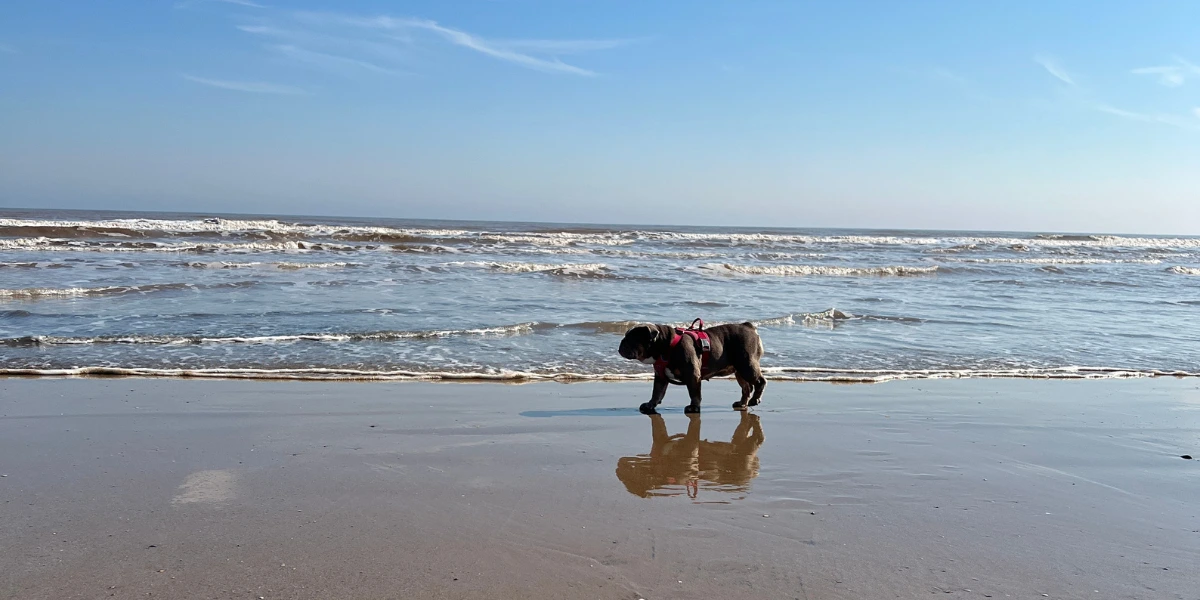
As well as the coastal cliff dangers, when you come down from the cliff coastal paths onto the sandy shores, there are also hazards to be aware of.
We have put together our vet-approved guide to the best local sandy spots.
And for extra dog walking safety help, we have shared some helpful tips for keeping safe on our beautiful East Yorkshire beaches, too.
Tide Safety for Dogs in Bridlington
Whilst we know a lot of pups love to practice their doggy paddle in the sea, watch out for changing tides and your dog getting tired in deep water. Make sure they don’t go too far, and keep them out of the water as the tides change.
If you know your dog is an avid swimmer, it might be worth investing in a dog life jacket.
Sinking Sand Risks on Withernsea Dog Walks
Over the past couple of years, there have been several reports of sinking sand incidents at Withernsea.
Stay aware when you are walking on the beach, keep dogs (and children) in sight at all times. Keep aware of areas of soft sand and mud and stay on surfaces that feel solid underfoot.
Fish Hooks And Unexploded Ordnance
The water isn’t the only danger on the East Yorkshire coast.
Unfortunately, there are often things that get washed up, or can become uncovered by shifting sands, tides, or digging paws.
Specific dangers to watch for include:
- Broken glass or bits of metal,
- Fish hooks,
- Washed up Jellyfish, dead fish and seaweed.
All along the East Yorkshire coast unexploded military ordnance has been found, especially at Cowden, and Mappleton beaches. We don’t know how much of this is yet to be found, so on all the beaches be aware, and at Cowden and Mappleton, we would advise not letting any dogs (or children) too far afield.
Supporting our community
At Aldgate Vets, we feel passionate about supporting our local community, so we have chosen the Bridlington branch of the RNLI to be our charity partner for 2026. We’ll be doing a number of charity fundraising events to raise vital funds for this important charity.
Aldgate Vets operations manager, Laura Crossland, said: “The money raised will be used to support our local Bridlington branch and we are aiming to raise enough to buy new suits for the team. There’s a good community feel about this partnership – we can’t wait to see what we can achieve.
“And by working together with organisations like the RNLI, we hope to spread an important message: understand the risks, and take steps to protect both yourself and your pets when walking in our local area.”
Emergency Veterinary Services
At Aldgate Vets, we run an emergency 24/7 practice. If you are ever in need of emergency pet care, whatever time of day, call our practice on 01262 677269